
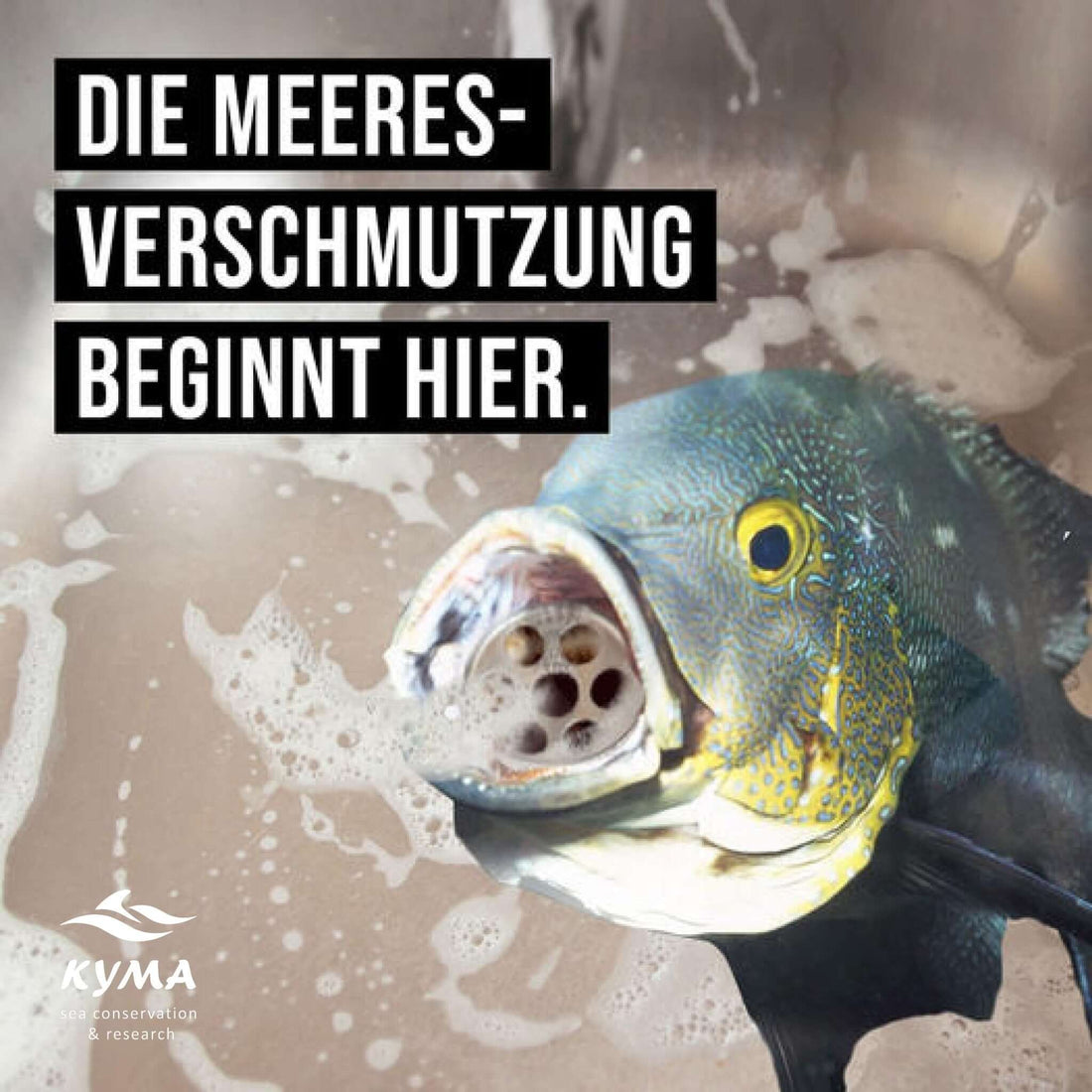
Stop microplastics - save marine animals!
This online petition needs your support:
www.mikroplastikstoppen.ch
The amount of newly produced plastic is increasing—currently, we are at around 400 million tons per year worldwide. It stands to reason that plastic pollution in the oceans has reached unimaginable proportions: every year, 9-14 million tons of plastic end up in the oceans worldwide. The material is so popular because of its robustness and durability. The downside: scientists estimate that every plastic product that has ever ended up in nature instead of in waste disposal is still there!
According to estimates, it takes 450 years for a plastic bottle in the ocean to decompose, and a synthetic fishing line takes as long as 600 years. However, "decompose" simply< < means breaking down into microplastics ( < 5 mm) and nanoplastics ( <0.001 mm). This means that the problem is far from solved. On the contrary: microplastics can injure and poison small marine animals because they attract pollutants. When ingested by animals, microplastics can therefore also be a toxic cocktail.
Plastic waste affects all marine life, large and small: as macro waste, it is a deadly trap or indigestible food for larger marine animals; it covers ecosystems such as mangroves and coral reefs; as microplastics, it affects the basis of the food chain, phytoplankton and zooplankton, and enters various organisms via the food chain. This includes us. In Europe, a person consumes approximately 11,000 microplastic particles per year through the consumption of shellfish.
What many people underestimate is that inland countries also contribute to plastic pollution in the oceans. Switzerland alone carries several tons of microplastics into the Mediterranean Sea and Rhine River every year. into the North Sea, because although local sewage treatment plants filter out a lot, they do not filter out everything from the wastewater. Even though other countries contribute significantly more to pollution, Switzerland should take responsibility for its actions—for our local environment and the sea. That is why the Swiss marine conservation organization KYMA sea conservation&research has & www.mikroplastikstoppen.chlaunched an online petitionwww.mikroplastikstoppen.chcalling for the regulation of various sources of microplastics. The petition will only be open for a short time, so be sure to join in and sign now!


